
Injection Molding Force Feedback
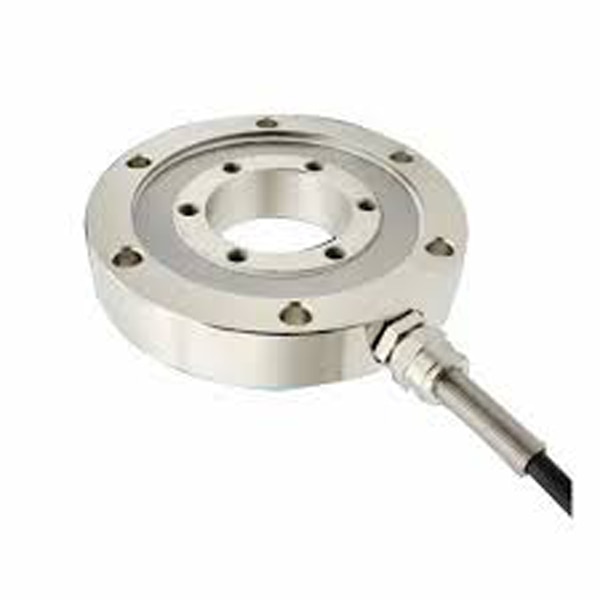
The clamping force in injection molding is the force applied by the molding machine's clamping unit to keep the mold halves securely closed during the injection and cooling processes.
This force, typically measured in tons (or kN), is essential because it must be sufficient to counteract the pressure exerted by the molten plastic inside the mold cavity. If the clamping force is too low, the mold can be pushed open, leading to a defect called "flash" (excess plastic squeezing out along the parting line), dimensional inconsistencies, or even a "short shot" (incomplete part filling). Conversely, excessive clamping force can damage the mold, cause mold wear, or create part defects like burn marks and gloss level changes.
Role of Load Cells in Clamping Force Measurement
Load cells, or force sensors, are transducer devices that measure mechanical force by converting it into a measurable electrical output. They are highly useful in injection molding for accurately measuring and monitoring the actual clamping force applied by the machine.
How Load Cells are Used:
Tie-Bar Sensors: The most common application involves installing strain gauge-based load cells, or specialized sensors that function similarly, directly on the tie-bars of the injection molding machine.
As the clamping unit applies force to the mold, the tie-bars stretch or elongate.
The load cells (or strain gauges) measure this minute elongation (strain) of the tie-bars.
This measured strain is then converted into a precise force (clamping force) reading.
Calibration and Verification: Load cells are used for the initial calibration and periodic verification of the machine's clamping unit to ensure the machine's set force (e.g., 200 tons) matches the actual force being exerted on the mold.
Process Optimization: Accurate force feedback from load cells allows operators to:
Optimize the clamping force to the minimum necessary value to prevent flash. This saves energy, reduces wear and tear on the mold and machine, and shortens cycle times.
Detect potential issues like uneven mold loading or machine wear by monitoring the force distribution across the tie-bars.