
Spring Force Tension Sensor | Spring Testing System
Springs are everywhere—from tiny components in your keyboard to massive parts in industrial machinery. Ensuring they perform as intended is critical for safety and function. This is where spring force tension sensors and spring testing load cells come in. These specialized force measurement tools are essential for quality control, research, and development, providing accurate data on a spring's behavior under load. If you're looking to improve your spring testing process, this guide will help you understand what to look for and how to choose the right equipment.
What is a Spring Force Tension Sensor?
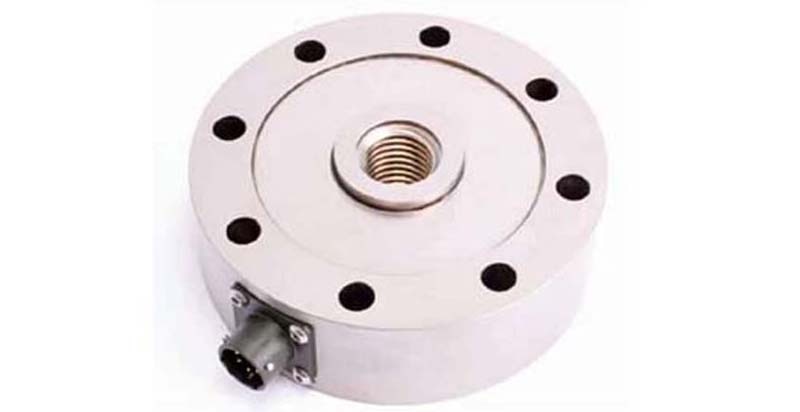
A spring force tension sensor, or a spring testing load cell, is a device specifically designed to measure the force a spring exerts during either compression or tension. While a standard load cell can be used for this purpose, a dedicated spring testing sensor is often optimized for the unique requirements of this application.
These sensors use a strain gauge system to convert mechanical force into an electrical signal. As a spring is compressed or stretched, the sensor deforms slightly, causing a change in the electrical resistance of the strain gauges. This change is then precisely measured and converted into a force reading (typically in Newtons or Kilograms).
The data from these sensors is crucial for verifying that a spring meets its specified force-deflection curve—a fundamental characteristic that defines its performance.
Key Applications and Industries
Spring testing load cells are indispensable in a variety of industries:
Manufacturing: Ensuring the quality of springs used in consumer electronics, automotive parts, and appliances.
Automotive: Testing suspension springs, valve springs, and other critical components to meet strict safety standards.
Medical Devices: Verifying the consistency of springs in syringes, drug delivery systems, and surgical tools.
Aerospace: High-precision testing of springs used in aileron control, landing gear, and other critical systems.
Research & Development: Characterizing new spring materials and designs.
Choosing the Right Sensor: What to Consider
Selecting the correct spring testing load cell is vital for accurate and repeatable results. Here are the key factors to evaluate:
Capacity: The sensor's maximum rated force must be greater than the maximum force you expect from the spring. Common capacities range from a few Newtons for small springs to several tons for industrial ones.
Accuracy: Look for a sensor with high linearity and low hysteresis. These factors ensure that the force reading is consistent and reliable across the full measurement range.
Tension vs. Compression: Determine whether you need to test springs under tension (pulling), compression (pushing), or both. Many sensors are universal and can handle both directions, offering greater versatility.
Mechanical Interface: The sensor must have the correct fittings to connect to your spring testing machine or fixture. This is often a threaded hole or a button-style design.
Durability: Choose a sensor made from high-grade stainless steel or alloy steel for longevity and resistance to corrosion and impact. An IP rating (Ingress Protection) is also important for protection against dust and moisture.