Description
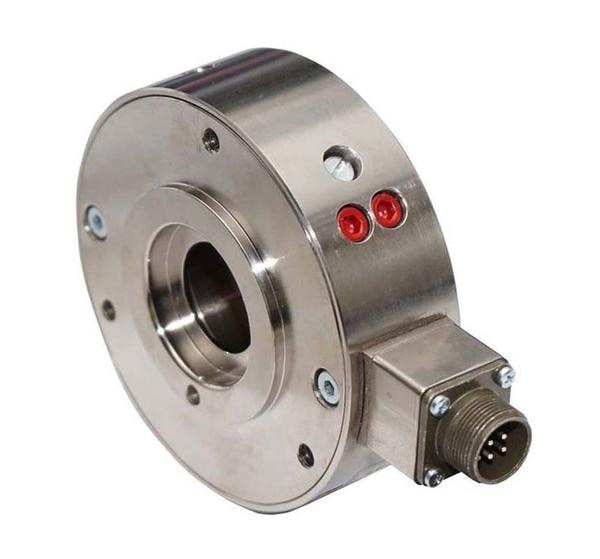
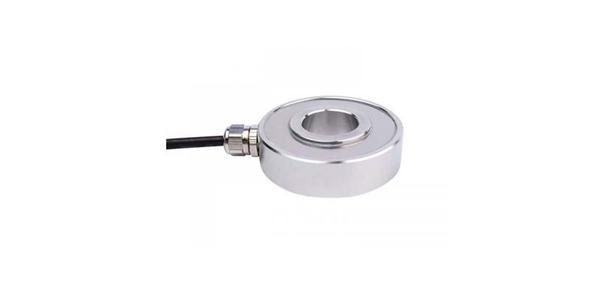
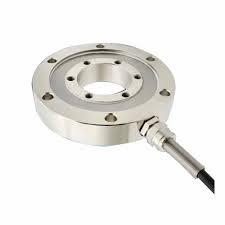
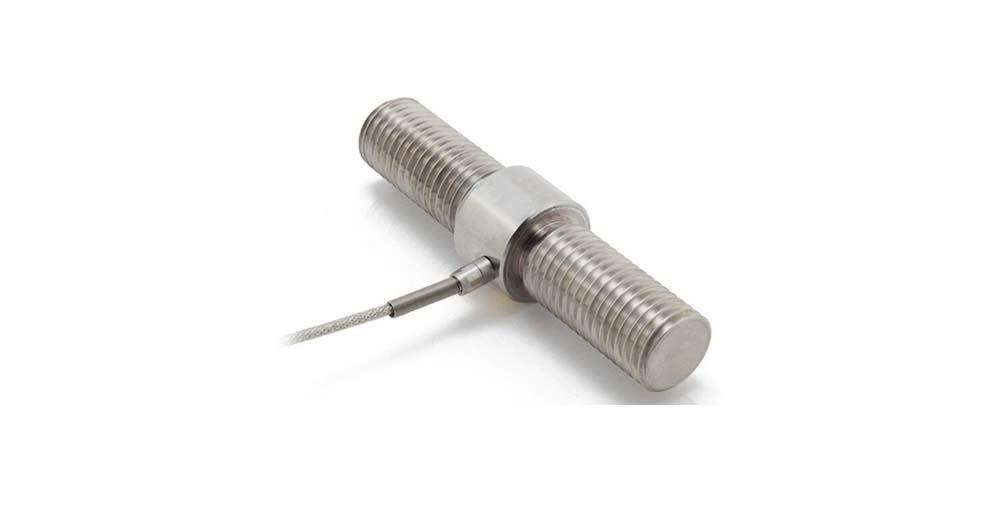
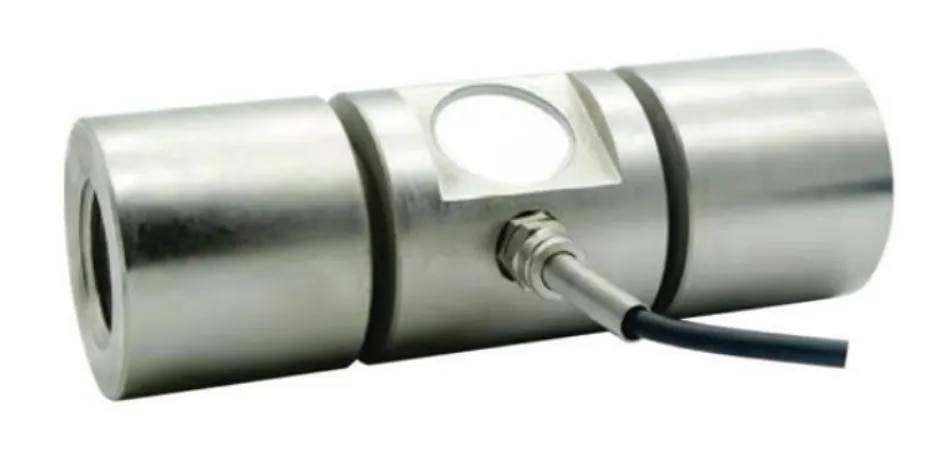
A female threaded in-line load cell, also known as a load button or donut load cell, is a type of force sensor designed to measure compressive or tensile forces along a single axis. Its name comes from its physical design: a small, compact body with a central hole that is female-threaded. This allows it to be screwed directly onto a male threaded rod, bolt, or stud, creating an in-line connection within a force application system.
These load cells are widely used across various industries, including manufacturing, robotics, and aerospace, due to their versatility and compact size. Their primary function is to measure the applied force with high accuracy and repeatability. The internal structure of the load cell consists of a steel or aluminum alloy body, known as the flexure, which deforms slightly under load. Bonded to this flexure are strain gauges—tiny electrical resistors arranged in a Wheatstone bridge configuration.
When a force is applied to the load cell, the flexure deforms, causing the strain gauges to stretch or compress. This physical change alters the electrical resistance of the gauges, which in turn unbalances the Wheatstone bridge. The output from the bridge is a small voltage signal directly proportional to the applied force. This voltage signal is then amplified and converted into a readable force measurement, typically in units like pounds (lbs), kilograms (kg), or newtons (N), by a separate instrumentation amplifier or signal conditioner.
The female threaded design offers several advantages. It simplifies the mechanical integration of the load cell into an existing system, as it can be easily mounted between two components. For example, it can be used to measure the tension on a cable by being threaded directly onto the end of the cable or to measure the clamping force of a press by being installed in-line with the piston rod. This design also ensures that the applied force is centered and aligned with the load cell's sensing axis, which is critical for accurate and reliable measurements.
Selecting the right female threaded in-line load cell requires considering several key specifications. The capacity of the load cell, which is the maximum force it can measure, is a crucial factor. Choosing a load cell with a capacity that matches or slightly exceeds the maximum expected load is essential to prevent damage. The accuracy of the load cell, typically expressed as a percentage of the full-scale output, determines its precision. Other important specifications include linearity, hysteresis, and temperature effect on zero and span, which all affect the overall performance and reliability of the measurement.
In conclusion, the female threaded in-line load cell is an indispensable tool for engineers and technicians needing to measure in-line compressive or tensile forces. Its compact form factor, robust construction, and high accuracy make it suitable for a wide range of applications, from quality control in manufacturing to safety monitoring in structural systems. By converting mechanical force into a measurable electrical signal, these devices provide critical data that helps optimize processes, ensure safety, and improve product quality.
We are also supply in Andhra Pradesh, Arunachal Pradesh, Assam, Bihar, Chhattisgarh, Goa, Gujarat, Haryana, Himachal Pradesh, Jharkhand, Karnataka, Kerala, Madhya Pradesh, Maharashtra, Manipur, Meghalaya, Mizoram, Nagaland, Odisha, Punjab, Rajasthan, Sikkim, Tamil Nadu, Telangana, Tripura, Uttar Pradesh, Uttarakhand, and West Bengal.