Customized Load Cells: The Complete Engineering Guide for OEM & Industrial Force Sensors
Standard off-the-shelf load cells work well for conventional weighing scales and standard testing rigs. However, modern machinery designs, harsh operating environments, and tight mechanical envelopes often demand tailored solutions. When physical dimensions, mounting constraints, or environmental factors rule out standard components, customized load cells and OEM force sensors ensure accurate, reliable measurement without compromising equipment geometry.
Here is an in-depth breakdown of when to customize, the mechanical and electrical engineering process, and how OEM force sensors are developed for mission-critical industrial applications.
When Does an Application Require a Custom Load Cell?
Opting for a bespoke force sensor is typically driven by specific mechanical, environmental, or signal-processing limitations:
- Envelope & Geometry Constraints: Compact medical devices, robotics, or space-constrained automated machinery often lack the clearance needed for standard S-beam or canister cells.
- Direct Structural Integration: Applications such as heavy-lift cranes, mooring lines, or clevis assemblies benefit from load pins or tension links that replace existing structural pivot pins, eliminating the need to redesign the entire mechanical assembly.
- Harsh Environments: Subsea monitoring, chemical processing, high-temperature foundries, and washdown environments demand specialized material metallurgy, high IP ratings (IP67, IP68, or hermetically sealed IP69K), and extended operating temperature ranges.
- Multi-Axis Force Measurement: Complex automation or structural test benches often require the simultaneous measurement of thrust, side loads, and torque ($F_x, F_y, F_z$ and $M_x, M_y, M_z$) within a single, integrated sensor body.
- Specialized Electrical Outputs: Direct compatibility with industrial PLCs, embedded microcontrollers, or distributed I/O modules often requires integrated signal conditioning—such as calibrated 4–20 mA current loops, 0–10 VDC, or RS485 Modbus RTU outputs—eliminating external transmitter enclosures.
Primary Types of Custom Force Sensors
Custom Load Pins
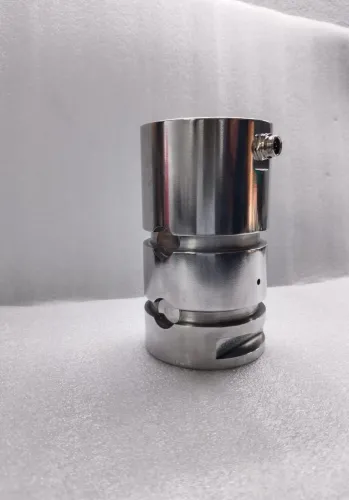
Engineered to replace existing pivot pins, clevis pins, or sheave axles. They measure shear forces directly within the structural joint, requiring zero changes to external machinery footprints. Common in winches, overhead cranes, and hydraulic cylinder clevis mounts.
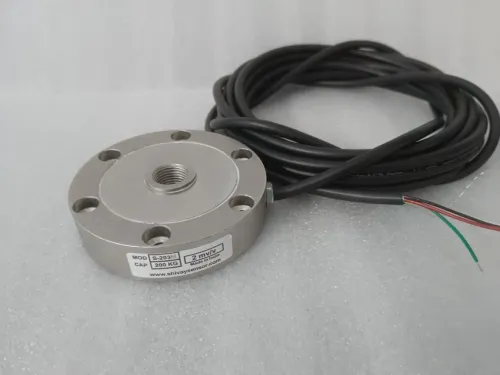
Pancake & Low-Profile Compression Sensors
Featuring low deflection and high natural frequency, custom low-profile shear-web or diaphragm cells offer high resistance to extraneous side loads and bending moments. Frequently specified for hydraulic press calibration, automotive durability testing, and materials testing machines.
Custom Tension Links
Designed for inline tension measurement in rigging, crane safety systems, and towing lines. Sized to match standard Crosby or Green Pin shackles, they provide high-tensile strength with minimal headroom loss.
Donut / Thru-Hole Load Cells
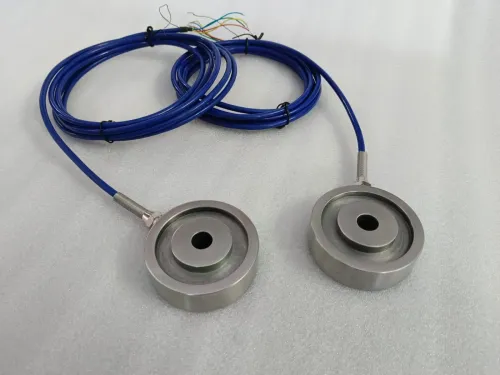
Engineered with an open center hole to accommodate bolts, tie-rods, or anchor tendons. Widely used for monitoring bolt clamping preload, post-tensioned bridge anchors, and plastic injection molding tie-bar strain.
Integrated Electronics: Raw mV/V vs. Amplified Signals
Depending on your system architecture, custom load cells can be configured with raw or active signal conditioning:
Unamplified ($mV/V$): Delivers a passive, ratiometric millivolt signal (typically 1.0 to 2.0 mV/V). Ideal when wiring runs back to high-resolution external transmitters, multi-channel dynamic data acquisition (DAQ) systems, or 24-bit delta-sigma ADCs located inside a central panel.
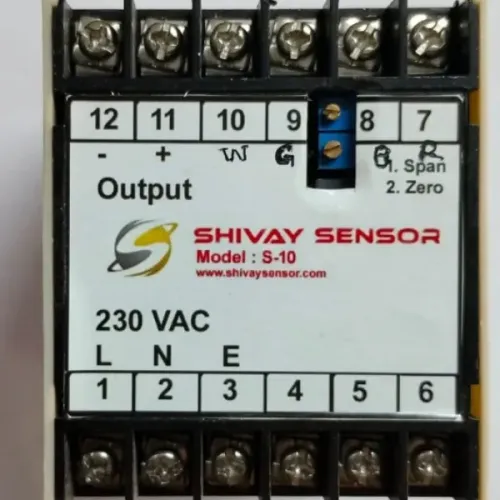
Analog Conditioned (4–20 mA / 0–10 V): Internal miniature PCBA converts bridge output directly into an amplified signal, ensuring high noise immunity over long cable runs in electrically noisy industrial plants.
Digital (RS485 Modbus RTU / CANopen): Embedded microcontrollers digitize the analog bridge output locally. The sensor transmits calibrated engineering units (kg, kN, lbs) directly over an industrial fieldbus network, simplifying multi-sensor addressing and diagnostics.
Checklist: Information Needed to Quote a Custom Load Cell
To accelerate engineering reviews and reduce development lead times, prepare the following parameters when submitting an inquiry to an OEM force sensor manufacturer:
- Capacity & Direction: Rated full-scale capacity, operating mode (tension, compression, bi-directional, or torque).
- Dimensional Envelope: Maximum permissible height, width, thread type/pitch, and center bore size.
- Mechanical Interface: Female/male threads, clevis pins, flanged mounting, or spherical load buttons.
- Accuracy Requirements: Target non-linearity, hysteresis, and repeatability (e.g., $le 0.05%$ FS for high-precision weighing vs. $le 0.5%$ FS for overload safety cutoff).
- Environmental Ratings: Operating temperature range, subsea immersion depth, washdown requirements, IP rating.
- Output Signal: Raw $mV/V$, 0–10 V, 4–20 mA, or digital communication protocol.
- Cable Exit & Connector: Radial or axial cable exit, protective stainless steel conduit, or quick-disconnect military-spec connectors (e.g., M12, Amphenol).
- Volume & Timeline: Rapid prototyping requirements versus serial OEM batch production volumes.
Summary
Investing in a customized load cell eliminates the compromises associated with adapting off-the-shelf components to non-standard machinery. By aligning material selection, flexure geometry, environmental sealing, and onboard signal processing to exact application requirements, equipment builders achieve higher operational safety, simpler mechanical integration, and dependable measurement accuracy.
#CustomLoadCells #ForceSensors #LoadCellManufacturer #OEMEngineering #IndustrialAutomation #StrainGauge #WeighingSolutions #SensorTechnology #ForceMeasurement #MechanicalEngineering #LoadCell #CustomSensors #ForceSensor #IndustrialDesign #Sensors #Instrumentation #TestAndMeasurement #ProcessAutomation #ManufacturingEngineering #LoadMonitoring #CustomLoadCell #OEMSensors #TensionLink #LoadPin #PancakeLoadCell #WheatstoneBridge #IndustrialWeighing #AutomationEngineering #InstrumentationAndControl #CustomLoadCells #OEMSensors #ForceSensors #IndustrialAutomation #LoadCellManufacturer #WeighingSystems
Keywords