Tank & Silo Weighing Load Cells & Mounting Kits: The Complete Selection & Installation Guide
Accurate inventory management, batching, and process control in modern manufacturing rely heavily on precise vessel measurement. While level sensors (like radar or ultrasonic) measure volume—which fluctuates with material density, bridging, or foam—tank and silo weighing load cells measure true mass directly, unaffected by material characteristics or internal obstructions.
However, achieving reliable accuracy requires pairing the right load cell with an engineered weighing mounting kit. Below is everything engineers and procurement teams need to know to select, install, and maintain a high-accuracy vessel weighing system.
Why Load Cells Outperform Level Sensors for Tank & Silo Weighing
Unlike flow meters or volumetric level transmitters, load cells sit externally beneath the vessel's support legs or brackets, never touching the material inside.
- Zero Contact & Hygiene: Ideal for food, beverage, pharmaceutical, and chemical applications where sanitary standards and corrosive materials make internal probes impractical.
- True Gravimetric Accuracy: Weighs solids, powders, slurries, and liquids accurately regardless of angle of repose, dust, temperature shifts, or irregular tank geometry.
- Low Maintenance: With no moving parts inside the tank, recalibration and inspection happen externally without halting production or draining the vessel.
Choosing the Right Load Cell for Tanks, Hoppers, and Silos
The capacity, geometry, and environmental conditions of your vessel dictate which load cell design performs best.
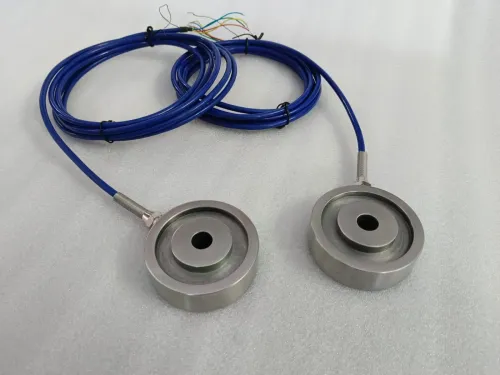
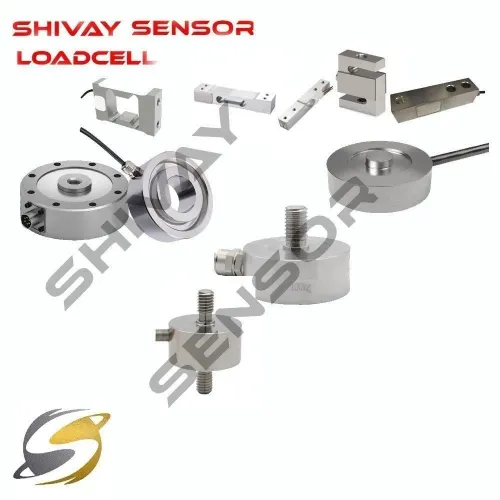
Load Cell TypeTypical Capacity RangeBest ApplicationsKey AdvantagesCompression 1ton – 500+ tonsLarge outdoor grain silos, cement silos, bulk storage tanksHandles extreme vertical loads; high overload toleranceDouble-Ended Shear Beam 2 tons – 100 tonsMedium-to-large process tanks, horizontal vessels, reactorsExcellent resistance to side loads and thermal expansionSingle-Ended Shear Beam 20 kg – 10 tonsSmall-to-medium hoppers, mixing tanks, batching vesselsCompact, cost-effective, easy to integrate into tight spacesS-Type (Tension) 10 kg – 10 tonsSuspended hoppers, hanging dosing vesselsSimplifies installation where floor mounting isn't possible
Essential Environmental & Compliance Ratings
- Ingress Protection (IP68 / IP69K): Mandatory for outdoor silos exposed to rain or indoor process tanks subjected to high-pressure washdowns.
- Material Construction: Choose 17-4 PH or 316 Stainless Steel with hermetic laser welding for corrosive, humid, or hygienic environments; alloy steel with nickel plating works well for dry indoor silos.
- Hazardous Area Approvals (ATEX / IECEx): Required when weighing combustible dusts (flour, sugar, coal) or volatile chemical solvents.
Why Mounting Kits Are Non-Negotiable
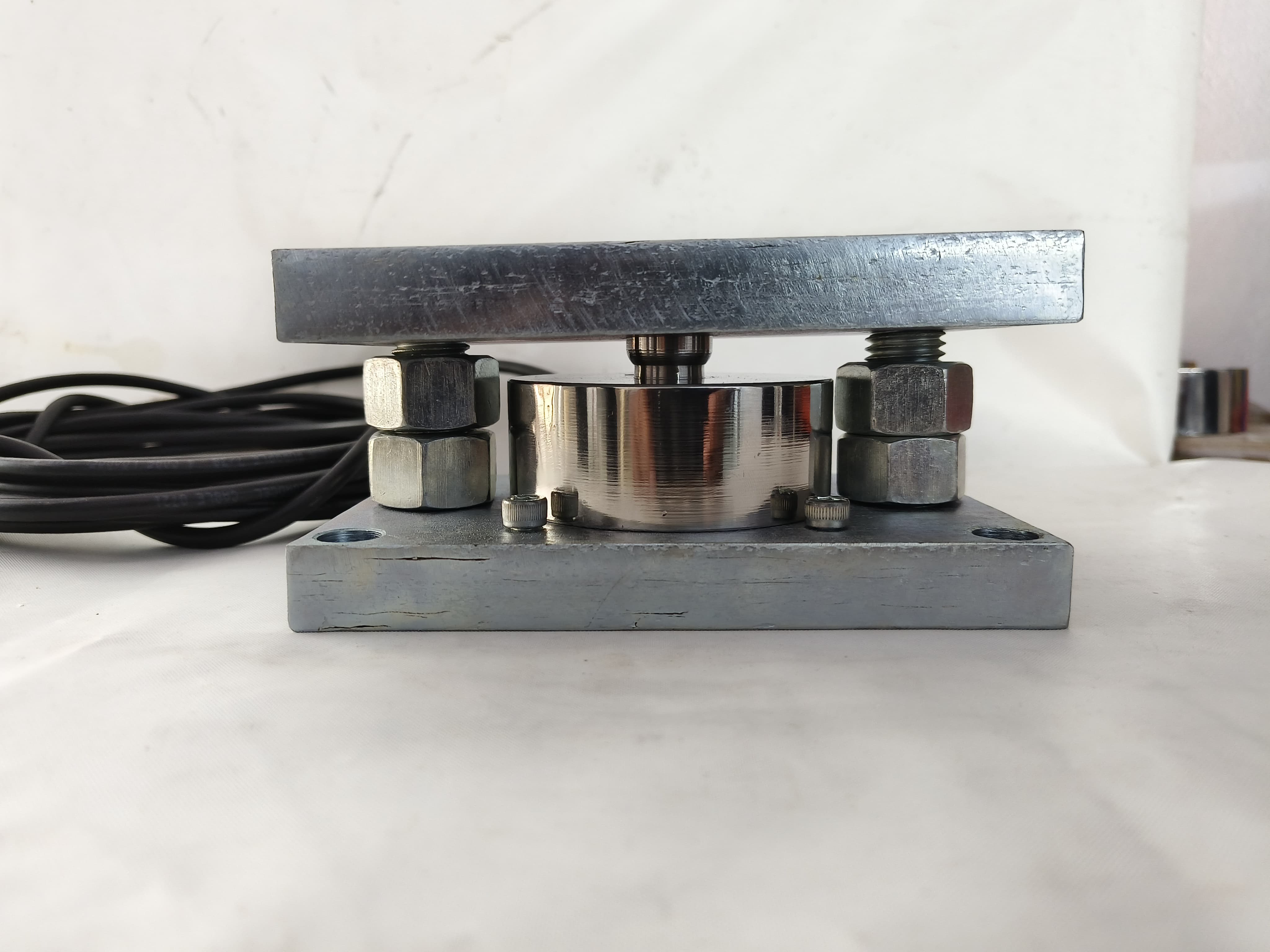
Installing a bare load cell directly under a silo leg is one of the most common causes of premature sensor failure and weighing errors. A dedicated load cell mounting kit transforms a raw sensor into a self-aligning mechanical assembly that protects against real-world structural forces.
- Thermal Expansion & Contraction: Outdoor silos heat up in the sun and cool at night; heated process tanks expand during operation. Mounting kits use rocker pins, sliding bearings, or pendulum links to allow horizontal movement without binding the load cell.
- Lift-Off & Tipping Protection: High winds on tall outdoor silos or vigorous agitation inside mixing tanks create upward lift-off forces. Integrated anti-lift bolts keep the vessel anchored safely without interfering with normal downward weight readings.
- Side-Load Rejection: Agitators, mixers, and rigid piping push vessels sideways. Mounting kits isolate vertical weight vectors while absorbing horizontal forces that would otherwise distort readings or damage the strain gauges.
- Simplified Maintenance (Jack-Up Feature): Many industrial mounting kits include integrated jacking points or dummy load cell spacers, allowing technicians to safely install or swap a load cell without bringing in heavy cranes.
5 Best Practices for Tank & Silo Weighing Installation
Even top-tier load cells will drift or read inaccurately if mechanical interference occurs around the vessel. Follow these installation rules to protect system accuracy:
- Use Flexible Piping Connections: Rigid pipes connected to the tank act like springs, carrying part of the vessel's weight and causing non-linear errors. Always install flexible bellows, braided hoses, or rubber expansion joints on inlets, outlets, and vents.
- Match Load Cell Count to Support Points: Use one load cell per support leg (typically 3 or 4 points). Three-point systems distribute weight evenly without shimming; four-point systems require careful shimming during commissioning to eliminate 'rocking' and uneven load distribution.
- Account for Dynamic & Wind Loads: When sizing load cell capacity, divide total gross weight (empty vessel + maximum product weight) by the number of legs, then add a 25% to 50% safety margin for wind loads, agitator torque, and uneven filling.
- Verify Foundation Rigidity: Silo concrete pads or structural steel mezzanines must not flex under full load. Deflection changes the angle of the mounting kit and introduces repeatable calibration errors.
- Protect Signal Cabling & Junction Boxes: Route shielded load cell cables through dedicated metal conduits away from high-voltage VFD motor lines, and use an IP67/IP68 stainless steel summing junction box with surge protection for outdoor silos.
#TankWeighing #LoadCells #SiloWeighing #IndustrialAutomation #ProcessControl #WeighingSystems #BulkMaterialHandling #LoadCellMounting #IndustrialSensors #ManufacturingTech #IndustrialWeighing #ProcessEngineering #Instrumentation #PlantMaintenance #BatchingSystems #HopperWeighing #PrecisionMeasurement #FactoryAutomation #SmartManufacturing #EngineeringSolutions #CompressionLoadCell #ShearBeamLoadCell #StainlessSteelLoadCell #IP68 #ATEX #StrainGauge #ForceMeasurement #WeighingTechnology #IndustrialEquipment #Calibration #FoodProcessing #PharmaManufacturing #ChemicalProcessing #GrainStorage #CementIndustry #BulkSolids #InventoryManagement #HygienicDesign #QualityControl #SupplyChainTech #LoadCell #TankWeighing #SiloWeighing #IndustrialTech #Automation #Engineering #Sensors #Manufacturing
Keywords