Universal Pancake Load Cell: Precision Industrial Force Measurement
When industrial applications demand high-capacity force measurement inside tight vertical clearances, standard S-beam or canister sensors often run out of room. The universal pancake load cell solves this engineering bottleneck. Combining a compact, low-profile circular geometry with bidirectional sensing, it measures both tension and compression loads with high accuracy and minimal deflection.
What Is a Universal Pancake Load Cell?
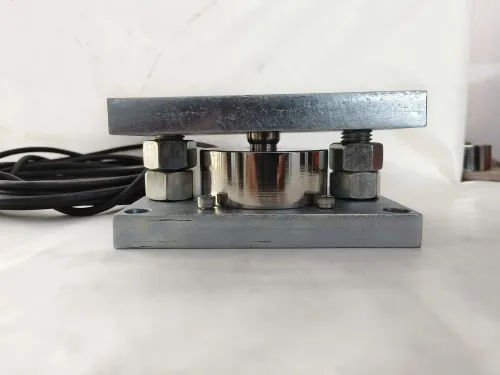
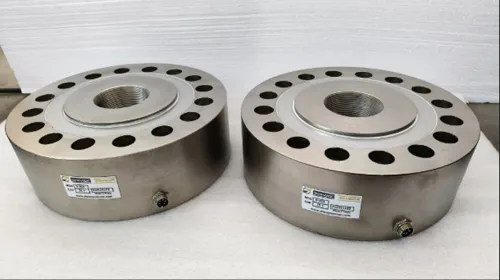
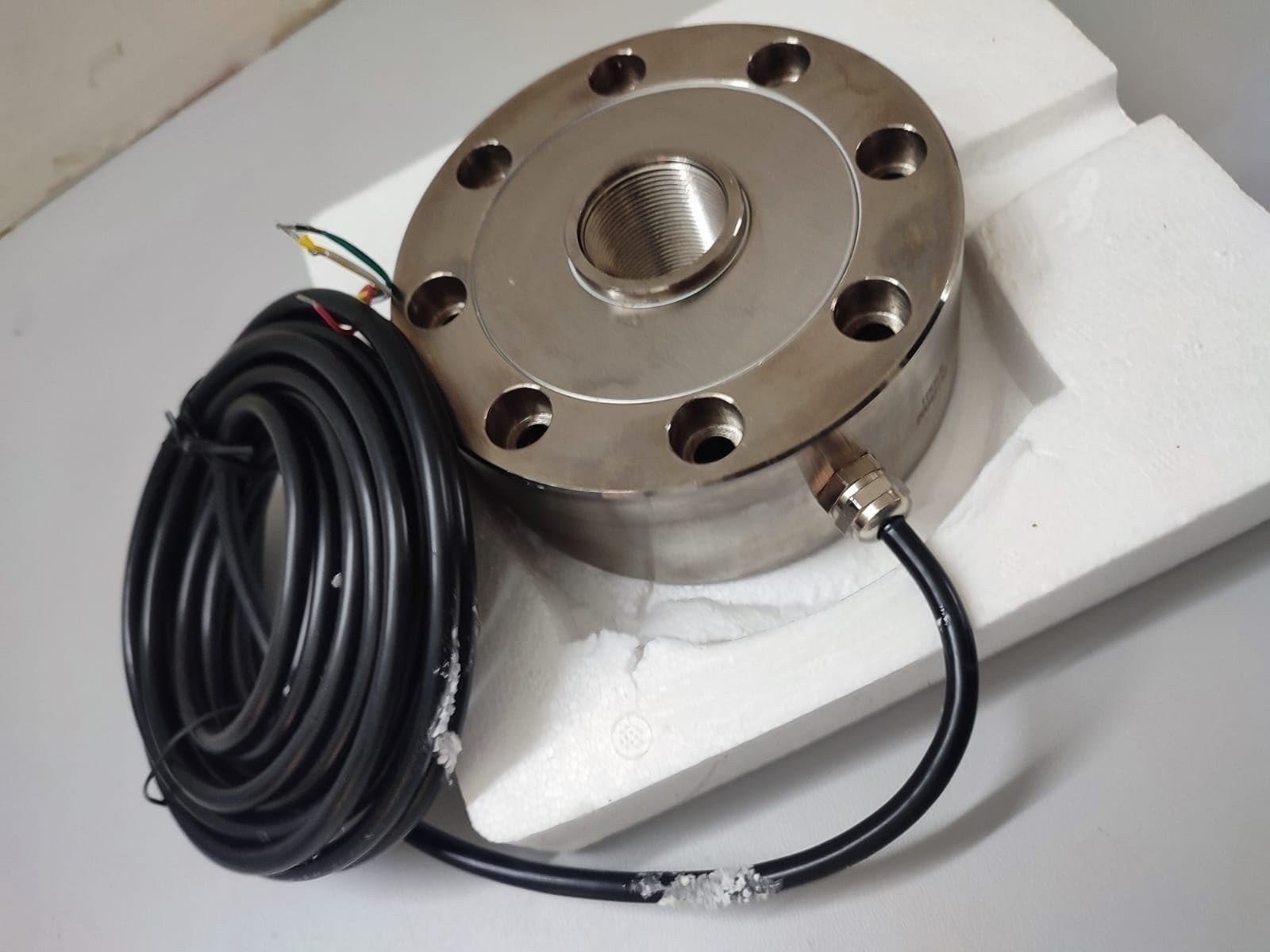
A universal pancake load cell—commonly referred to as a low-profile load cell—is a flat, disc-shaped force transducer engineered to measure forces acting along a single central axis. The term 'universal' denotes its bidirectional capability: unlike compression-only button sensors, it accurately measures both pushing (compression) and pulling (tension) forces through a central threaded hole.
Most industrial-grade pancake load cells rely on shear web design technology. Internal radial spokes (webs) experience shear stress when force is applied to the central hub. Foil strain gauges bonded to these webs convert mechanical deformation into a precise, proportional electrical signal (typically measured in mV/V).
Key Engineering Advantages
- Ultra-Low Profile Height: Fits seamlessly into space-constrained assemblies, hydraulic presses, and compact test frames without sacrificing structural rigidity.
- High Resistance to Off-Center Loads: The symmetrical radial web geometry naturally cancels out bending moments, side loads, and torque—protecting measurement accuracy when alignment is imperfect.
- Wide Capacity Range: Available from a few hundred newtons up to several meganewtons (500 N to 5,000+ kN), making them suitable for both delicate laboratory testing and heavy-duty structural monitoring.
- Minimal Deflection & High Natural Frequency: Stiff construction yields fast dynamic response times, ideal for high-speed fatigue testing and automated inline quality control.
- Rugged Environmental Protection: Hermetically sealed stainless steel housings (IP67/IP68) withstand oil, moisture, dust, and extreme temperatures on harsh factory floors.
Common Industrial Applications
Because of their versatility and structural durability, universal pancake load cells serve as the backbone of force monitoring across multiple industries:
- Material Testing Machines (UTMs): Measuring tensile strength, yield points, and compressive failure in metals, polymers, and composites.
- Press-Fit & Stamping Operations: Monitoring insertion force in automotive bearing assembly, crimping, and hydraulic presses to prevent part damage.
- Aerospace & Structural Testing: Multi-point fatigue testing of airframes, wings, and civil engineering components using synchronized load cell arrays.
- Silo, Tank, and Hopper Weighing: Supporting heavy vessels where low height lowers the center of gravity and improves stability.
- Cable, Rope, and Bolt Tensioning: Verifying preload on structural fasteners, crane cables, and guy-wires.
How to Select the Right Universal Pancake Load Cell
Choosing the right sensor prevents premature overload failure and ensures repeatable data:
- Calculate Maximum Load + Safety Margin: Select a rated capacity at least 20% to 30% higher than your peak operating force to absorb shock loads and dynamic spikes.
- Verify Mounting Accessories: For compression, pair the sensor with a hardened load button to concentrate force on the center hub. For tension, use spherical rod-end bearings to eliminate bending stresses.
- Check Fatigue Rating: If your application involves millions of load cycles (such as automated press lines or fatigue rigs), specify a fatigue-rated model engineered for continuous bidirectional cycling.
- Match Output to Your DAQ or PLC: Standard sensors output an analog 2.0 mV/V or 3.0 mV/V signal. If you are wiring directly into an industrial PLC over long cable runs, pair the cell with an inline amplifier (4–20 mA, 0–10 V, or IO-Link/CANopen).
- Confirm Environmental Sealing: Choose alloy steel with nickel plating for dry indoor labs, or welded 17-4 PH stainless steel for washdown, outdoor, or corrosive industrial environments.
Maximizing Accuracy in the Field
Even the best load cell requires proper mechanical installation to hit its rated accuracy specification (typically 0.03% to 0.10% of full scale). Always mount the outer ring onto a flat, rigid, precision-ground baseplate—any unevenness in the mounting surface introduces parasitic stress that causes zero-balance drift and nonlinearity.
Looking to integrate a universal pancake load cell into your press, test stand, or weighing system? [Explore our catalog of low-profile tension and compression load cells] or [contact our engineering team] for custom capacities, thread sizes, and calibration certificates.
#LoadCell #ForceMeasurement #IndustrialAutomation #TestAndMeasurement #Sensors #MechanicalEngineering #ManufacturingTech #PancakeLoadCell #LowProfileLoadCell #TensionAndCompression #StrainGauge #ForceSensor #LoadTesting #MaterialTesting
Keywords