Donut Load Cells: Thru-Hole Load Cell for Accurate Force Measurement
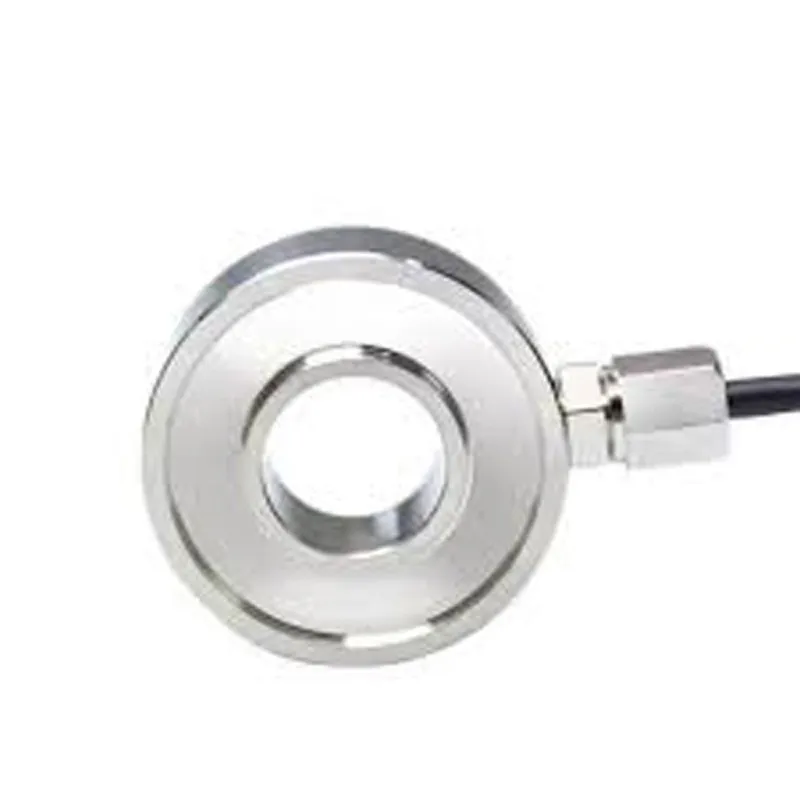
In the world of force and load measurement, finding the right sensor is crucial for achieving accurate and reliable results. While many types of load cells exist, the donut load cell stands out for its unique design and specialized applications. Also known as a thru-hole or annular load cell, this sensor is a game-changer for measuring compressive forces in tight spaces or around a central shaft.
What is a Donut Load Cell?
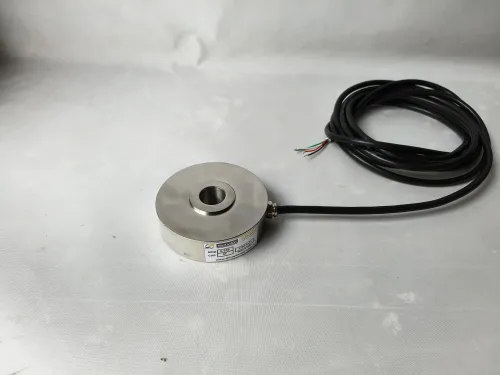
A donut load cell gets its name from its shape—a circular, ring-like structure with a central hole. This design allows it to be installed directly around a bolt, shaft, or stud, making it ideal for applications where a conventional load cell would be impractical. This sensor measures the force or load applied along its central axis, providing highly accurate data for a variety of industrial and research purposes. The core technology is similar to other load cells: strain gauges are bonded to a sensing element and deform under load, changing their electrical resistance. This change is then converted into a measurable output signal.
Why Choose a Donut Load Cell?
The primary advantage of the donut load cell is its ability to measure compressive force without interfering with the integrity of the system's structure. Imagine you need to monitor the tension in a bolt or the force exerted by a press on a central component. A traditional load cell would have to be placed externally, which could introduce measurement errors or require significant structural modifications. The thru-hole design of the donut load cell solves this by allowing it to be integrated directly into the assembly, ensuring that the force is measured precisely where it is applied.
Another key benefit is their compact and robust nature. They are often made from high-grade stainless steel or aluminum, making them resistant to harsh environments, including extreme temperatures and corrosive substances. This durability, combined with their high accuracy, makes them a go-to choice for demanding applications in manufacturing, aerospace, and civil engineering.
Applications of Donut Load Cells
The versatility of the donut load cell makes it indispensable in numerous fields. In manufacturing, they are used to monitor the clamping force in presses, molds, and robotics. This ensures consistent product quality and prevents damage to machinery. They are also vital in civil engineering for measuring bolt tension in bridges, tunnels, and other large structures, ensuring safety and structural integrity.
In research and development, these load cells are used to test material properties, such as the force required to crush or deform a sample. Their precision and ease of integration also make them perfect for laboratory setups and custom test rigs. From weighing systems to overload protection in lifting equipment, the applications are vast and varied.
Choosing the Right Donut Load Cell
When selecting a donut load cell, several factors must be considered:
- Capacity: The maximum load the sensor can accurately measure.
- Dimensions: The outer diameter and, most importantly, the size of the central hole (thru-hole diameter) to fit your application.
- Material: The material of the load cell should be compatible with the operating environment.
- Accuracy: The level of precision required for your specific needs.
- Output Signal: The type of electrical signal (e.g., mV/V) that is compatible with your data acquisition system.
By carefully evaluating these factors, you can ensure that you select the perfect donut load cell for your project, guaranteeing accurate and reliable force measurement every time. Its unique design and powerful capabilities make it an invaluable tool for engineers and researchers alike, providing a precise solution for complex measurement challenges.
We are also supply in Andhra Pradesh, Arunachal Pradesh, Assam, Bihar, Chhattisgarh, Goa, Gujarat, Haryana, Himachal Pradesh, Jharkhand, Karnataka, Kerala, Madhya Pradesh, Maharashtra, Manipur, Meghalaya, Mizoram, Nagaland, Odisha, Punjab, Rajasthan, Sikkim, Tamil Nadu, Telangana, Tripura, Uttar Pradesh, Uttarakhand, and West Bengal.
Keywords