Pancake Load Cells | Low Profile Compression & Tension Sensors
When industrial applications demand high capacity, extreme accuracy, and a compact footprint, standard load cells often fall short. Space constraints and extraneous forces (like side loads) require a specialized solution.
Enter the pancake load cell (also known as a low-profile or spoke-type load cell).
Whether you are designing a high-capacity weighing system, material testing machines, or industrial automation platforms, understanding how these low-profile sensors handle both compression and tension forces is critical. Here is everything you need to know about optimizing your industrial force measurements.
What is a Pancake Load Cell?
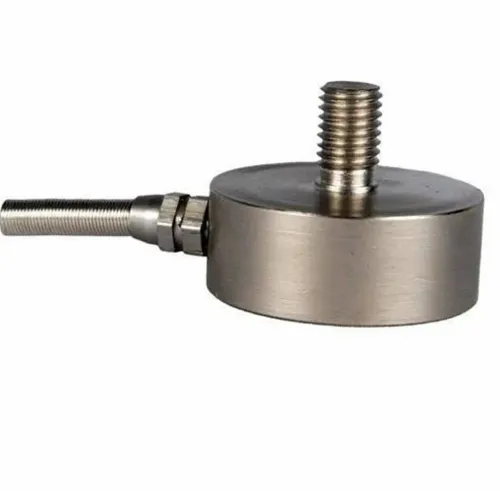
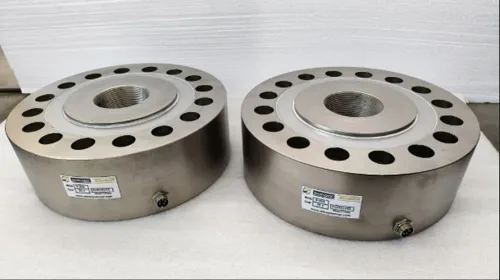
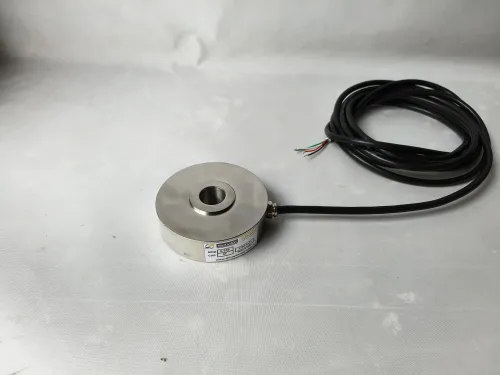
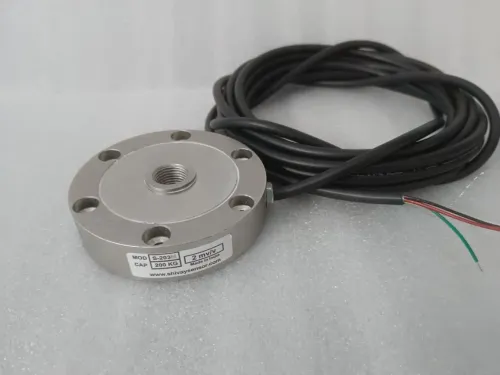
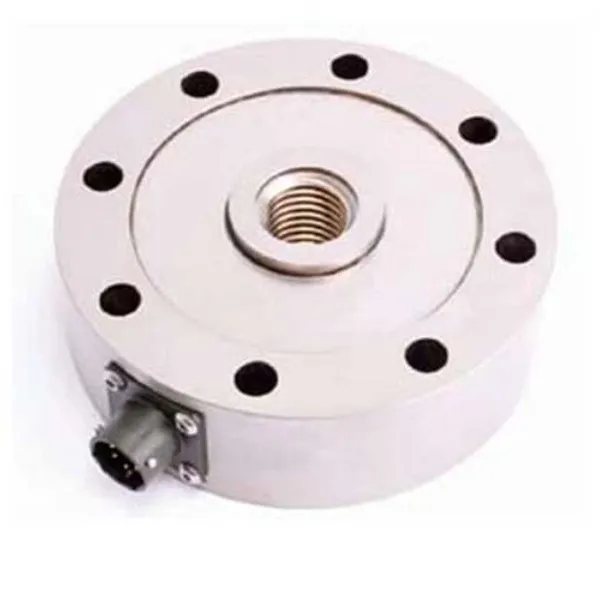
A pancake load cell is a low-profile, button-shaped force sensor designed with a highly symmetric, internal radial spoke structure. Because of this design, it offers a distinct advantage over standard S-type or shear beam load cells: it is exceptionally rigid and resistant to extraneous, off-center forces.
While they are inherently compact in height, their larger diameter ensures a highly stable base, making them the gold standard for high-capacity applications ranging from 500 kg to over 100 metric tons.
Compression vs. Tension: Universal Measurement
One of the greatest engineering benefits of a high-quality pancake load cell is its universal design. By utilizing a central threaded hole, these sensors can seamlessly measure both pushing and pulling forces.
- Compression Applications: Force is applied directly to the top surface or via a compression button. Ideal for silo weighing, tank weighing, and press force monitoring.
- Tension Applications: Pulling rods or shackles are threaded directly into the center of the cell. Ideal for inline structural testing, cable tension monitoring, and tension link configurations.
Core Advantages of Low-Profile Spoke Sensors
1. High Resistance to Off-Axis/Side Loads
In real-world industrial environments, force is rarely applied perfectly in a straight line. Structural shifting, thermal expansion, and mechanical vibration introduce side loads and bending moments that can ruin the accuracy of lesser sensors. The internal shear-web spoke design of a pancake load cell naturally cancels out these extraneous forces, ensuring your stable count and resolution remain uncompromised.
2. Fatigue-Rated Durability
Many industrial testing applications involve millions of continuous cycles. High-quality pancake load cells are machined from premium, heat-treated alloys (such as 17-4 PH stainless steel or EN24 aircraft alloy steel) and are fatigue-rated to withstand millions of fully reversed tension-to-compression cycles without structural degradation or zero-shift calibration errors.
3. Space-Saving low Profile
When vertical clearance is limited in a machine or factory floor layout, standard shear beams take up too much vertical envelope. The low-profile geometry minimizes the overall height of the weighing assembly, keeping the system's center of gravity low and inherently stable.
Technical Specifications to Look For
When evaluating low-profile sensors for your next project or product line, prioritize these critical performance parameters:
ParameterWhy It MattersCombined ErrorLook for less than $pm 0.05%$ Full Scale to ensure high accuracy.Temperature CompensationEssential for outdoor or harsh foundry environments to prevent zero-drift.Enclosure RatingOpt for IP67 or IP68 hermetic sealing (welded bellows or specialized potting) to protect internal strain gauges from moisture, dust, and washdowns.Output SensitivityStandard 2.0 mV/V or higher outputs ensure excellent signal-to-noise ratios when running long cable lines to your instrument controllers.
Common Industrial Applications
- Material Testing Machines (UTMs): Providing precise feedback for destructive and non-destructive tension/compression testing.
- Aero-Space & Automotive Testing: Measuring structural loads on airframes, suspension components, and thrust brackets.
- Large Scale Silo and Tank Weighing: Ensuring stable, legal-for-trade accuracy even when exposed to high wind loads.
- Industrial Presses: Monitoring precise insertion and stamping forces in automated manufacturing lines.
Summary
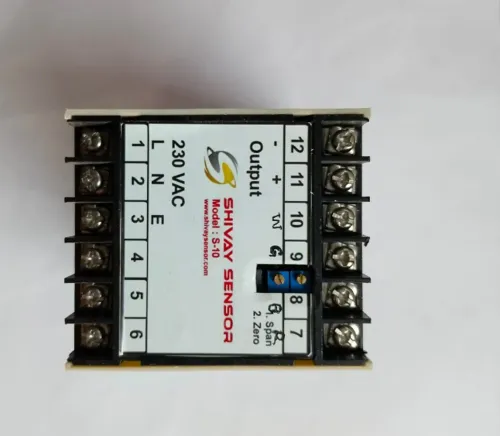
Choosing a pancake load cell means investing in structural rigidity, multi-axis reliability, and long-term durability. By matching your low-profile compression and tension sensors with high-precision signal conditioning (such as low-noise, 24-bit ADCs), you can achieve reliable, flicker-free force monitoring under the harshest mechanical conditions.
#PancakeLoadCell #LowProfileLoadCell #ForceSensor #LoadCell #IndustrialSensors #WeighingSystems #MaterialTesting #HighPrecision #IndustrialAutomation #SensorManufacturer #MakeInIndia #PancakeLoadCell #ForceMeasurement #IndustrialAutomation #ProcessControl #WeighingSystems #Instrumentation #LoadCell #Sensors #HowItWorks #IndustrialSensors #Automation #Engineering #PancakeLoadCell #LoadCellManufacturer #IndustrialWeighing #MakeInIndia #MSMEIndia
Keywords