Donut Load Cell: High-Precision Thru-Hole Force Sensors
In the world of industrial force measurement, not every application is a straightforward 'top-down' compression task. Sometimes, you need to measure force in spaces where a bolt, shaft, or rod must pass right through the center of the sensor.
This is where the Donut Load Cell (also known as a Thru-Hole or Washer Load Cell) becomes the unsung hero of the engineering world.
What is a Donut Load Cell?
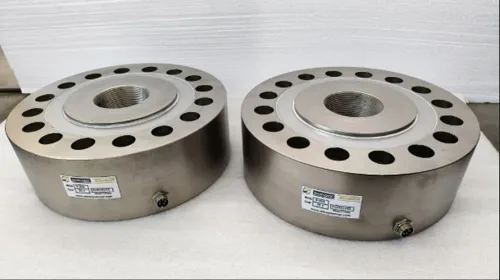
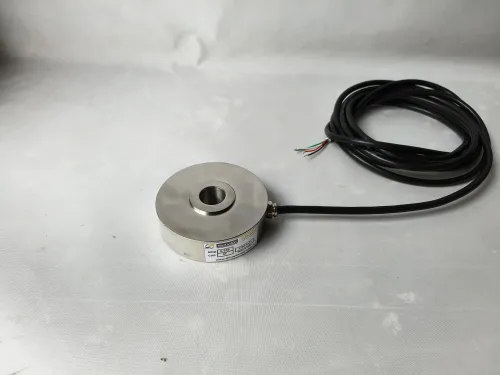
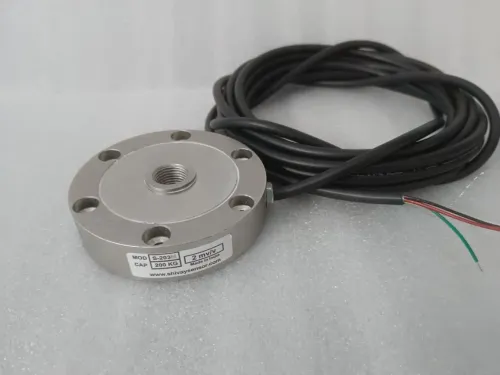
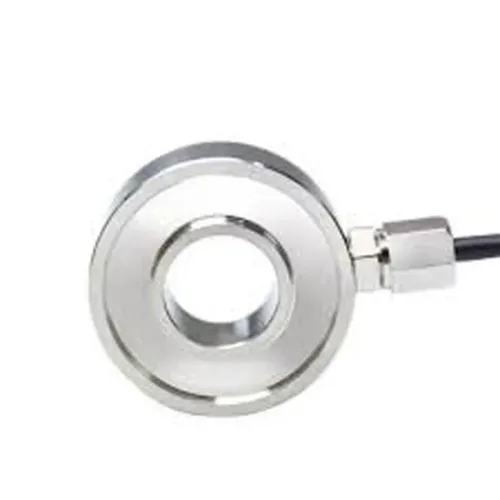
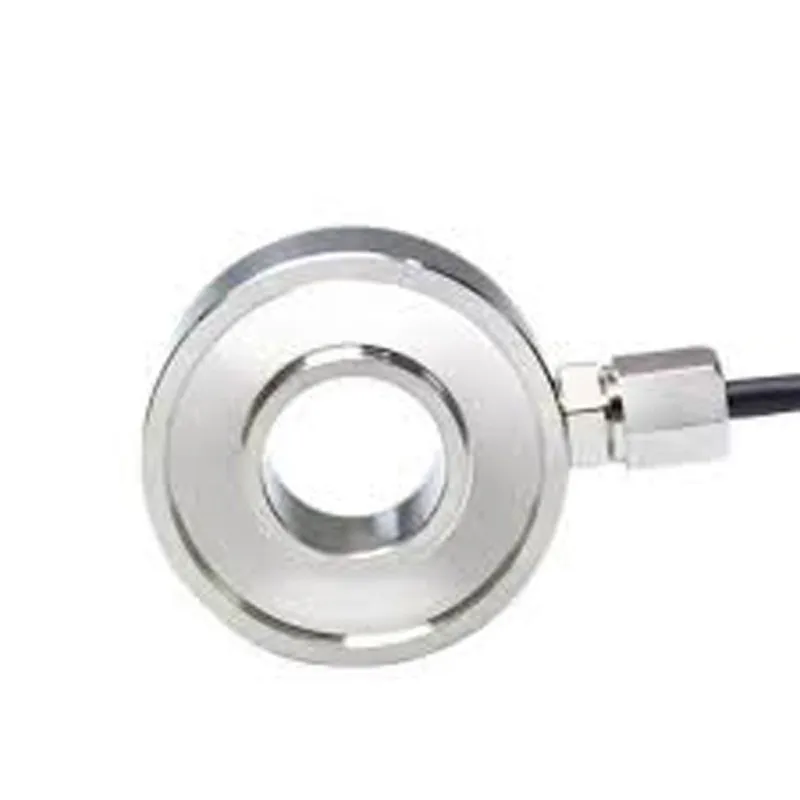
A Donut Load Cell is a high-precision compression sensor designed with a hollow center. Unlike standard button load cells, its 'thru-hole' geometry allows it to be integrated directly onto threaded fasteners or rotating shafts.
Think of it as a highly intelligent industrial washer. It doesn't just sit there; it measures the exact clamping force or load being applied to the assembly.
Key Technical Specifications
- Construction: Typically high-grade Stainless Steel or Aluminum.
- Capacity: Ranges from 10 lbs to over 50,000 lbs.
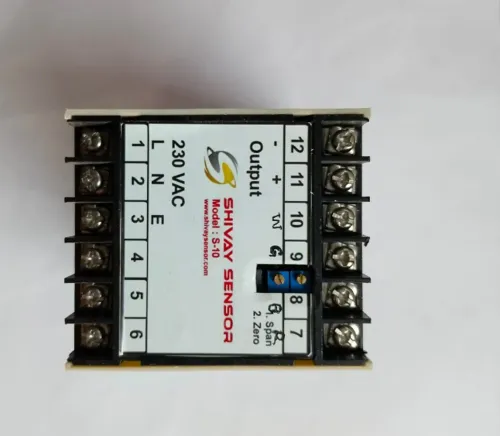
- Output: Usually mV/V, though amplified versions (4-20mA or 0-10V) are common for modern PLC integration.
Why Choose a Thru-Hole Design?
The primary advantage of the donut style is its form factor. When you are dealing with bolt loading or press-fit applications, you cannot place a solid sensor in the path of the fastener.
1. Bolt Tensioning & Clamping Force
Donut load cells are the gold standard for measuring how much force a bolt is actually exerting. Rather than relying on torque (which can be inaccurate due to friction), these sensors provide the real-time clamping force in pounds or Newtons.
2. Space Efficiency
Their low-profile design allows them to fit into tight mechanical assemblies where vertical space is a premium.
3. High Stiffness
Because they are essentially solid metal rings, they have very low deflection, making them ideal for high-cycle industrial environments.
Common Applications
IndustryUse CaseAutomotiveMeasuring engine mount fasteners and suspension bolt tension.ManufacturingMonitoring press-fit forces in assembly lines.AerospaceTesting structural joint integrity and wing spar fasteners.ResearchMaterial testing where a sample must be pulled or pushed through a center point.3 Tips for Installing Donut Load Cells
To get the most accurate 'high-precision' data from your sensor, follow these best practices:
- Parallel Surfaces: Ensure the surfaces contacting the top and bottom of the 'donut' are flat and parallel. Any uneven loading (side-loading) will cause measurement errors.
- Hardened Washers: Use hardened ground washers between the load cell and the nut/bolt head to ensure even distribution of the force.
- Avoid Over-Torquing: Always stay within the rated capacity of the cell. Exceeding the limit can permanently deform the internal strain gauges.
Conclusion
The Donut Load Cell is the ultimate solution for applications requiring a combination of high capacity and a thru-hole architecture. Whether you are monitoring the structural integrity of a bridge or the assembly of a consumer electronic device, these sensors provide the 'thru-hole' precision necessary for modern engineering.
#LoadCell #ForceMeasurement #Sensors #IndustrialAutomation #MechanicalEngineering #PrecisionEngineering #IoT #SmartManufacturing #DonutLoadCell #TestAndMeasurement #EngineeringLife #TechInnovation #ForceSensors #IndustrialTech #Robotics #HardwareEngineering #MeasurementSolutions #AutomationTech #Manufacturing #QualityControl #EngineeringDesign #SensorTech #IndustrialDesign #MachineDesign #TechTrends #PrecisionTools
Keywords