Inline Load Cells: Custom & Standard Force Sensors
In industrial automation, aerospace testing, and material research, measuring force accurately isn't just a requirement—it’s a safety-critical necessity. When it comes to measuring forces directly in line with a mechanical component, the inline load cell is the undisputed industry standard.
But what exactly is an inline load cell, how does it work, and how do you choose the right one for your specific application?
Let’s break it down.
What is an Inline Load Cell?
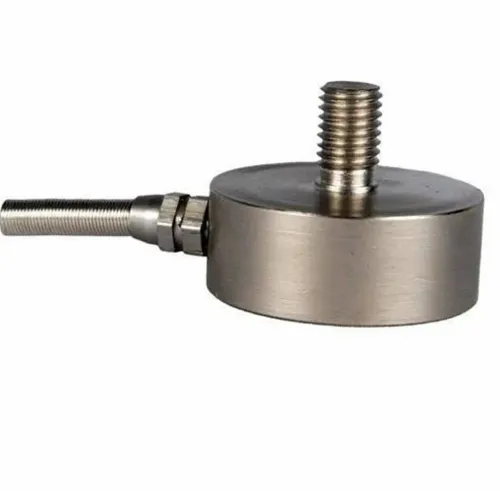
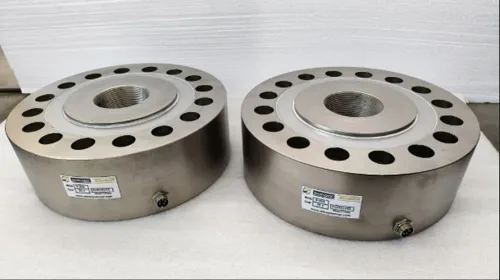
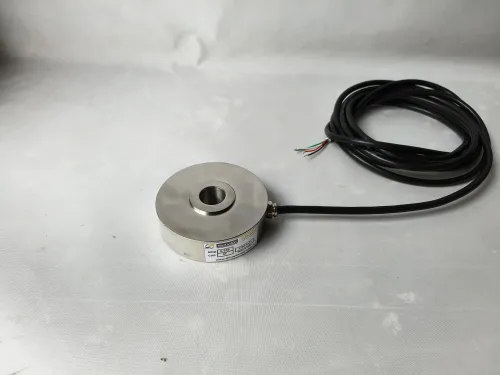
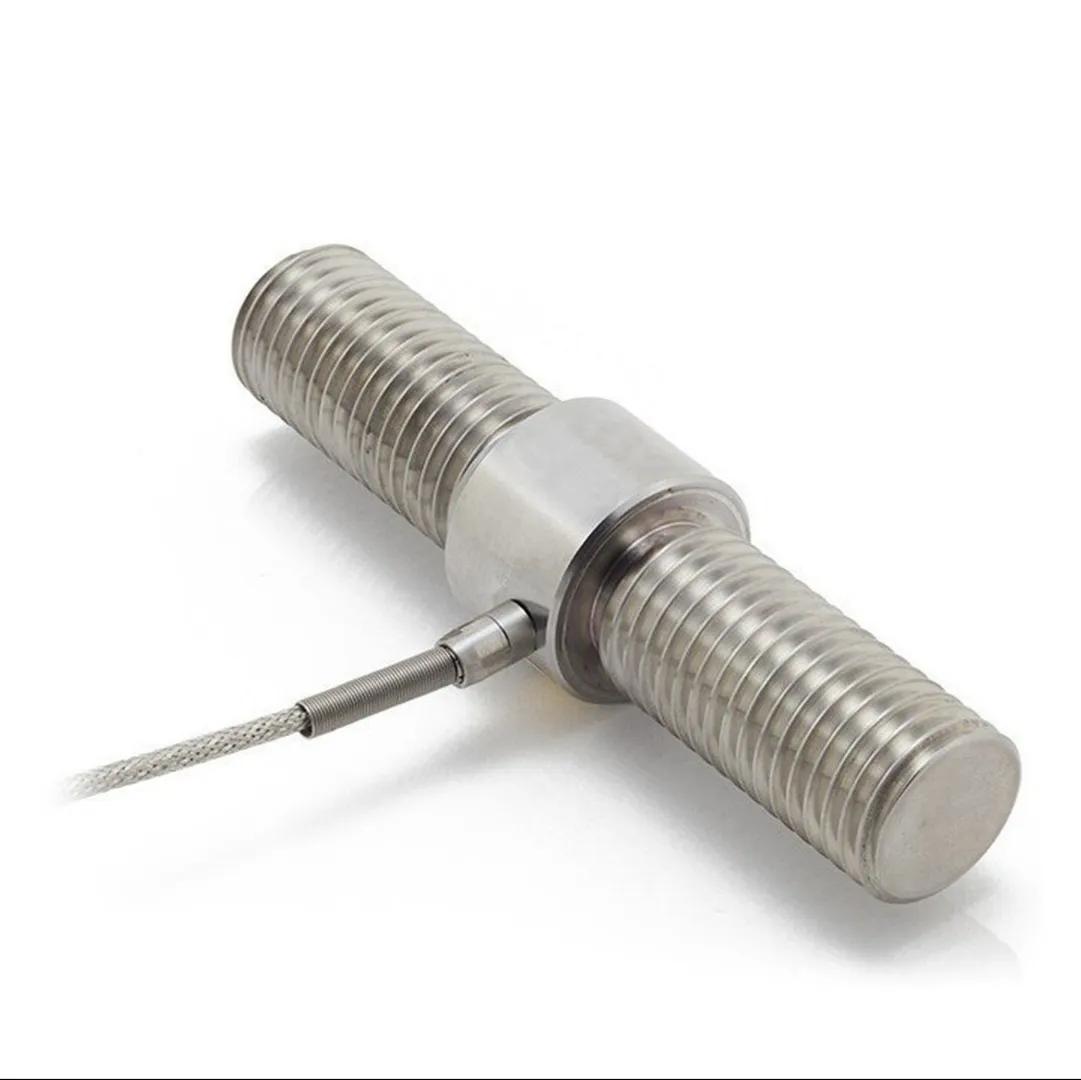
An inline load cell (often referred to as an in-line force sensor or canister load cell) is a compact, highly precise sensor designed to measure both tension (pulling) and compression (pushing) forces.
Unlike other force sensors that require bulky mounting fixtures, inline load cells feature a sleek, cylindrical design with male or female threaded rods on both ends. This allows them to be integrated directly—or in line—with the linkages, cables, or actuators pushing or pulling the load.
How Does an Inline Load Cell Work?
At the core of most inline load cells is a internal element equipped with metal foil strain gauges.
[Force Applied] ➔ [Mechanical Deformation] ➔ [Change in Resistance] ➔ [Electrical Signal Output]
- Mechanical Force: When a tensile or compressive force is applied along the central axis of the sensor, the internal structure undergoes microscopic deformation.
- Resistance Change: This tiny deformation alters the electrical resistance of the bonded strain gauges.
- Signal Conversion: The strain gauges are wired into a Wheatstone bridge circuit, which converts the resistance change into a measurable millivolt ($text{mV/V}$) electrical signal.
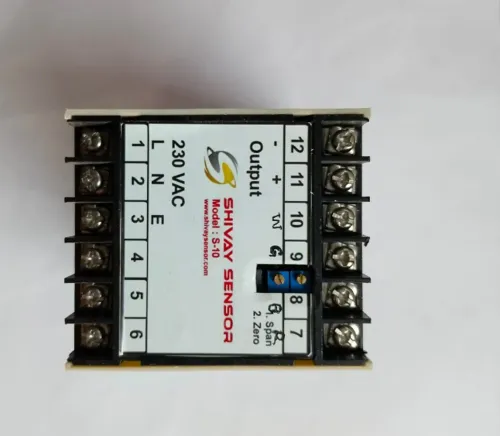
- Data Output: This signal is then sent to a digital indicator, PLC, or data acquisition system to be read as pounds (lbs), Newtons (N), or kilograms (kg).
Because the force passes straight through the center of the sensor, it minimizes extraneous side loads, resulting in highly repeatable and accurate data.
Key Advantages of Inline Force Sensors
Why choose an inline design over an S-beam or button load cell? Here are the primary benefits:
- Dual-Directional Measurement: They seamlessly handle transitions between tension and compression without needing recalibration.
- Compact Footprint: Available as miniature inline load cells, these sensors fit easily into tight spaces, making them ideal for medical devices and robotics.
- High Ruggedness: Most industrial inline load cells are machined from high-grade stainless steel or aluminum and are rated IP65 to IP68 for harsh, dusty, or wet environments.
- Axial Alignment: The threaded ends ensure that the force is naturally directed along the sensor's central axis, reducing measurement errors caused by off-center loading.
Common Applications across Industries
Thanks to their versatility, inline load cells are utilized across a massive spectrum of modern engineering:
1. Actuator Performance Testing
They are frequently threaded directly onto hydraulic or pneumatic piston rods to monitor the exact thrust or pull force being exerted during automated assembly.
2. Wire and Cable Tension Monitoring
In crane operations, winch lines, and elevator testing, inline load cells ensure that cables do not exceed their safe working load limits.
3. Product Quality Control
Used in automated 'go/no-go' testing stations to measure the force required to click a switch, press a bearing, or snap a component together.
4. Aerospace and Automotive Testing
Crucial for structural fatigue testing, where materials or components must be subjected to millions of cycles of push-and-pull forces.
How to Choose the Right Inline Load Cell
Selecting the perfect sensor requires looking beyond just the price tag. Keep these technical specifications in mind:
SpecificationWhat to ConsiderCapacityEnsure your expected maximum force falls within $60%text{--}80%$ of the sensor's rated capacity to avoid accidental overloading.Thread Size & TypeMatch the sensor threads (Metric or Imperial, Male or Female) directly to your existing hardware setup.EnvironmentIf your application involves moisture, subsea immersion, or corrosive chemicals, opt for a hermetically sealed, stainless steel model.
Conclusion
Inline load cells offer an unmatched combination of accuracy, durability, and compact design for axial force measurement. Whether you are building a high-tech medical device or monitoring heavy industrial winches, getting the right inline sensor ensures safety, efficiency, and precise data tracking.
Keywords