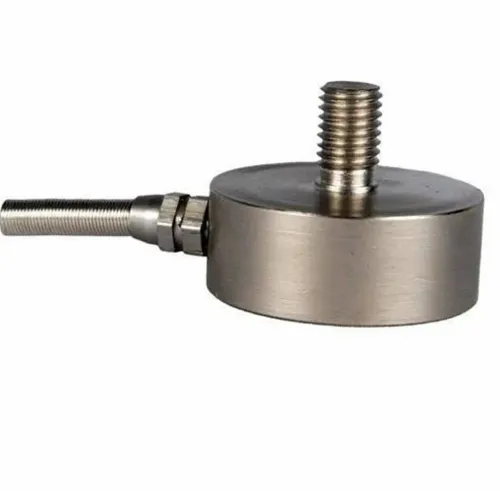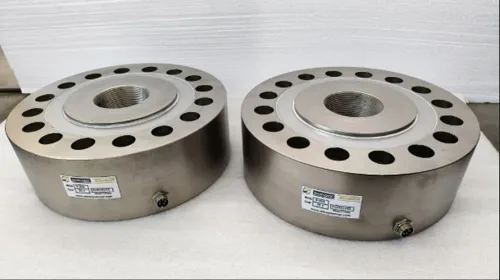
Ring Type Load Cell
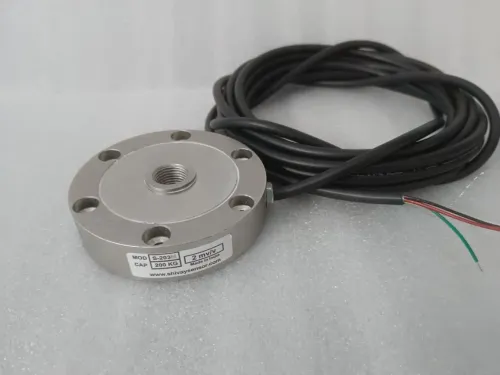
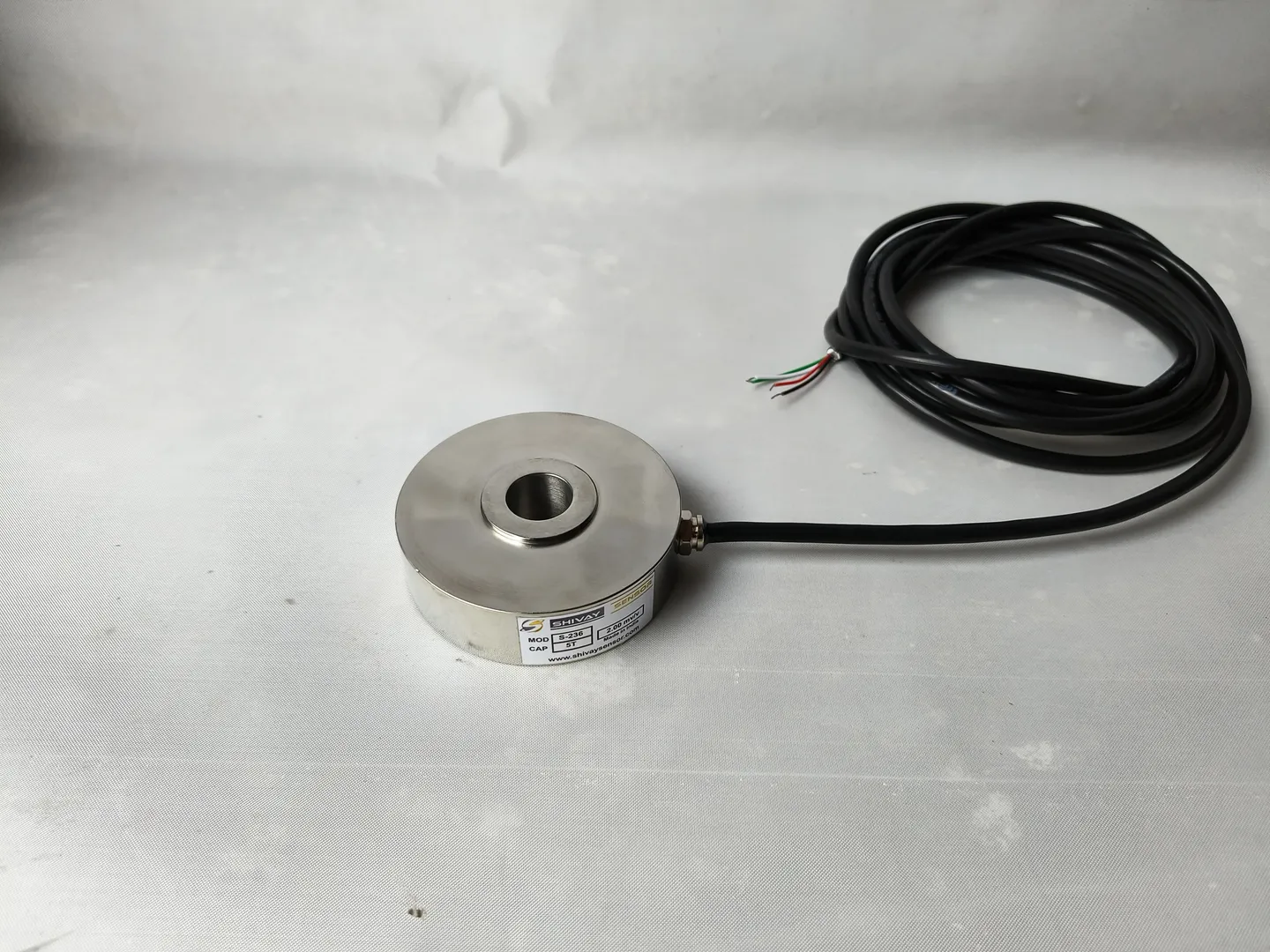
Ring type load cells—often referred to as pancake or annular load cells—are specialized strain gauge sensors engineered for high-capacity force measurement in compact, low-profile spaces. Designed with a distinct ring-shaped elastomeric body, these sensors excel at handling high compressive forces and heavy industrial loads with exceptional stability and accuracy.
What is a Ring Type Load Cell?
A ring type load cell is a force transducer that utilizes an annular or ring-shaped metallic element (typically high-strength stainless steel or alloy steel) to measure compressive forces.
When an external load is applied centrally to the ring, the element undergoes slight, proportional mechanical deformation. Precision strain gauges bonded to the internal surfaces of the ring measure this deformation and convert the mechanical strain into a precise electrical signal (usually measured in millivolts per volt, mV/V).
Key Design Features
- Low Profile: Low vertical height makes them ideal for installations with limited headroom.
- Annular Geometry: The central hole allows for tie-rods, bolts, or hydraulic lines to pass through the center of the cell.
- Hermetic Sealing: Frequently laser-welded with IP67 or IP68 ingress protection against dust and moisture.
- High Off-Center Load Tolerance: Resists side forces and eccentric loading better than standard canister load cells.
How Does a Ring Type Load Cell Work?
The operation of a ring type load cell relies on the fundamentals of strain gauge technology and Wheatstone bridge circuits:
- Force Application: A compressive load is applied to the top bearing surface of the ring structure.
- Strain Detection: As the ring compresses, the internal diameter decreases slightly while the external diameter expands, causing measurable strain across the surface.
- Signal Conversion: Foil strain gauges strategically placed inside the ring experience resistance changes proportional to the applied load.
- Output Signal: A Wheatstone bridge circuit converts the resistance change into a stable analog electrical signal, which is sent to a digital indicator, PLC, or telemetry system.
Key Advantages of Ring Type Load Cells
FeatureIndustrial BenefitHigh Capacity in Compact SizeMeasures loads from 1 ton up to 500+ tons without requiring large vertical clearance.Center-Through Hole DesignEnables direct mounting around tension rods, anchor cables, or hydraulic cylinders.Superior Side-Load ResistanceMaintains high accuracy even in harsh environments prone to thermal expansion or vibration.Durable ConstructionHeavy-duty stainless steel build ensures resistance to corrosive chemicals and outdoor elements.
Common Industrial Applications
Ring type load cells are deployed across industries where extreme capacities, structural monitoring, and space constraints overlap:
1. Tank, Silo, and Vessel Weighing
Their low overall height and stability under thermal movement make ring load cells ideal for placement beneath supporting legs of large liquid storage tanks, grain silos, and hoppers.
2. Geotechnical and Anchor Bolt Monitoring
The central pass-through hole allows ground anchors, rock bolts, and tiebacks to pass directly through the load cell, enabling continuous structural health monitoring in tunnel construction, dams, and retaining walls.
3. Industrial Presses and Rolling Mills
Used to monitor continuous clamping force, stamping pressure, and roll-force measurement in steel mills and heavy manufacturing machinery.
4. Crane Weighing and Winch Systems
Integrated into crane sheaves or cable anchor points to prevent overload conditions and ensure safe lifting operations.
Key Factors to Consider When Selecting a Ring Load Cell
To ensure reliable performance and long operational lifespan, evaluate the following parameters before purchasing:
- Rated Capacity & Safe Overload: Select a sensor rated for 120% to 150% of your maximum expected load to accommodate sudden dynamic spikes.
- Ingress Protection (IP Rating): Choose IP67 for standard indoor/outdoor washdown areas, or IP68/IP69K for submerged, underground, or high-pressure steam environments.
- Material Selection: Stainless steel is essential for food processing, marine, or chemical environments, whereas alloy steel offers a cost-effective solution for dry indoor industrial machinery.
- Accuracy Class & Non-Linearity: Verify hysteresis, non-linearity, and repeatability specifications to ensure they meet your process control tolerances.
- Operating Temperature Range: Look for temperature-compensated sensors if operating in extreme heat or freezing outdoor conditions.
Ring Type vs. Traditional Canister Load Cells
While both load cell types handle high-capacity compression, their structural suitedness differs:
- Vertical Space: Ring load cells require significantly less vertical clearance than tall canister models.
- Through-Hole Capability: Canister load cells lack a central hole, rendering them unsuitable for cable anchor or tie-rod installations.
- Stability: The wide footprint of a ring load cell offers higher resistance to tilting and off-axis forces.
#LoadCell #ForceSensor #Sensors #IndustrialAutomation #WeighingSystem #Instrumentation #Manufacturing #ProcessControl #RingLoadCell #RingTypeLoadCell #PancakeLoadCell #DonutLoadCell #ThroughHoleSensor #StrainGauge #CompressiveForce #Transducer #StructuralHealthMonitoring #SiloWeighing #TankWeighing #GeotechnicalEngineering #ForceMeasurement #MachineConditionMonitoring #IndustrialMaintenance
Keywords