Top Shear Beam Load Cell Manufacturers & Dealers in India
In the world of industrial measurement, few components are as ubiquitous and dependable as the shear beam load cell. While the name might sound technical, its function is simple and critical: to accurately measure force, particularly in compression, making it the backbone of countless weighing systems around the globe. From the large scales at a bustling factory to the precise measurements in a chemical plant, the shear beam load cell works tirelessly to ensure accuracy and efficiency.
What Makes a Shear Beam Load Cell Unique?
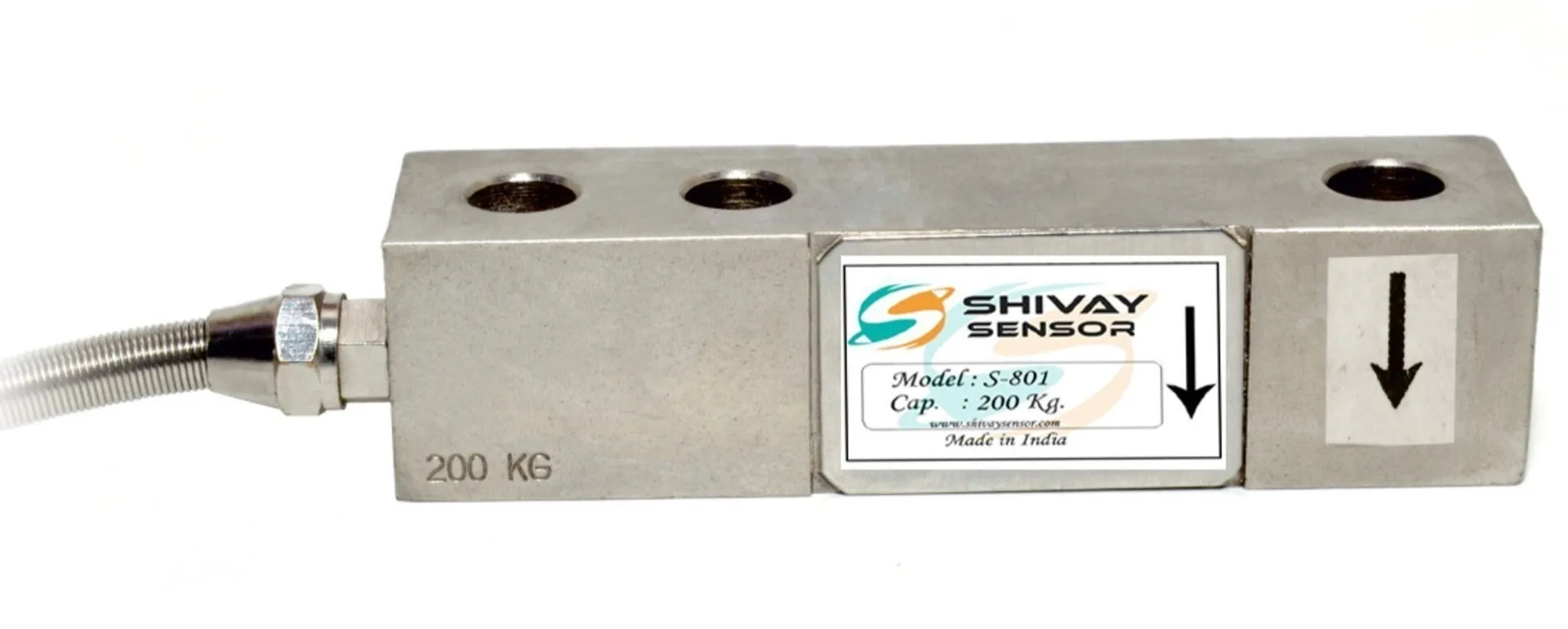
Unlike other types of load cells that might measure a bending or a column-like deformation, the shear beam load cell operates on the principle of shear stress. Its distinctive rectangular shape is specifically designed to handle forces applied vertically, with the strain gauges strategically mounted to measure the 'shearing' action that occurs within the beam's body. When a load is placed on the cell, the top half of the beam moves slightly in the opposite direction of the bottom half, causing a minute deformation. This subtle shearing motion is what the internal strain gauges detect and convert into a measurable electrical signal.
Most shear beam load cells are constructed from high-quality materials like alloy steel or stainless steel, which provide the strength and durability needed for harsh industrial environments. They are often sealed to protect against moisture and dust, making them suitable for use in dusty warehouses or wet processing plants.
How They Work: The Science of Shear
The magic behind the shear beam load cell is the precise placement of strain gauges. These tiny sensors, bonded to the beam's surface, are wired into a Wheatstone bridge circuit. When a load is applied, the beam experiences shear stress, causing a proportional change in the resistance of the strain gauges. This change unbalances the circuit, generating a small voltage output that is directly proportional to the applied force.
This signal is then sent to a weight indicator or a control system, which amplifies and processes the data to display a weight reading. The accuracy and repeatability of this process are what make shear beam load cells the preferred choice for a wide range of applications.
Common Applications of Shear Beam Load Cells
The robust and versatile nature of shear beam load cells makes them essential components in numerous industrial settings. Their primary use is in platform scales, where they are typically installed at the corners to support a platform and provide accurate weight readings for everything from pallets to livestock.
They are also widely used in tank and hopper weighing systems. In these applications, the load cells are mounted beneath a vessel to measure the weight of its contents, which is crucial for inventory management and process control. Other common uses include conveyor belt scales, batching systems, and weighing modules for custom machinery.
In summary, the shear beam load cell is a testament to the power of a well-engineered design. Its ability to accurately and reliably measure force in a variety of challenging environments makes it a fundamental component of modern industrial weighing. While you may not see them, their presence ensures that precision and efficiency are maintained in the background of our daily lives.
#IndustrialWeighing #ShearBeamLoadCell #LoadCell #ForceMeasurement #IndustrialAutomation #Scales #WeighingSolutions
Keywords