How to Accurately Measure Bolt Preload and Clamping Force
In industrial assembly, structural engineering, and heavy machinery manufacturing, a bolted joint is only as reliable as its tightening integrity. Simply relying on a torque wrench is often not enough to guarantee safety. If a bolt is under-tensioned, vibration can cause it to back out; if it is over-tensioned, the bolt can deform or shear completely.
To ensure structural integrity, engineers must shift their focus from torque to what actually matters: bolt preload and clamping force.
In this comprehensive guide, we will explore why traditional torque measurement falls short and how using a thru-hole load cell (donut load cell) provides the most accurate, real-time data for your assemblies.
The Torque vs. Tension Dilemma: Why Torque Isn’t Enough
A common misconception in assembly shops is that torque equals tightness. In reality, torque is merely a measurement of the rotational resistance encountered while turning a bolt.
When you apply torque to a fastener, only about 10% to 15% of that energy is actually converted into useful axial preload (the tension that clamps the joints together). The remaining 85% to 90% of the energy is lost overcoming friction in two places:
- Friction between the bolt head/nut and the mating surface.
- Friction between the mating threads.
Because friction coefficients change drastically based on surface roughness, coatings, rust, and lubrication, a torque wrench can give identical readings on two different bolts while producing vastly different clamping forces. To achieve high precision, you must measure the axial force directly.
Enter the Thru-Hole Load Cell: The Gold Standard for Clamping Force
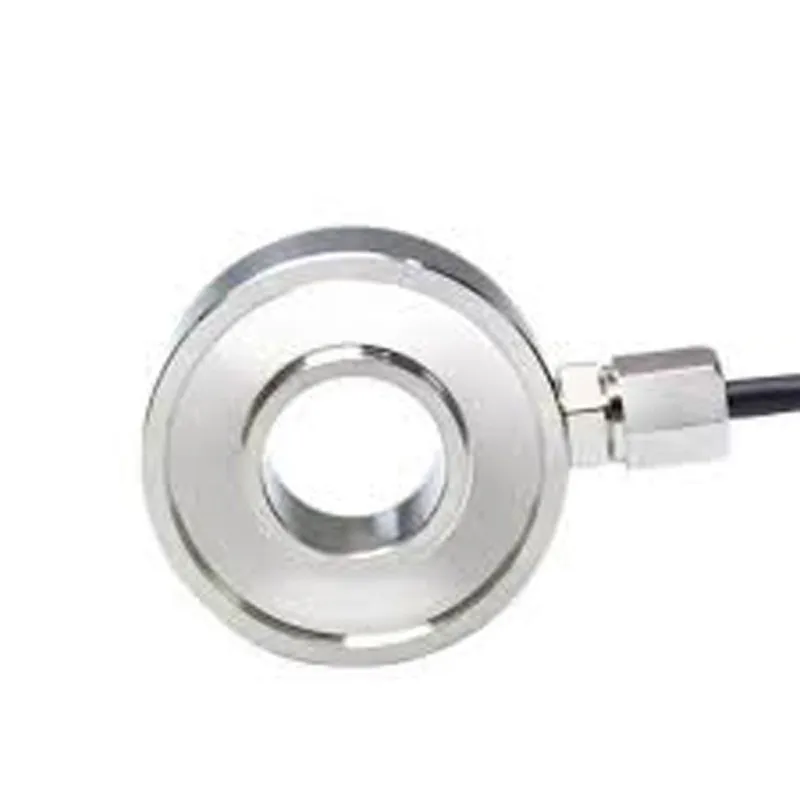
The most direct, reliable, and non-destructive method to measure bolt preload is by integrating an annular force transducer, commonly known as a thru-hole load cell or donut load cell.
How a Donut Load Cell Works
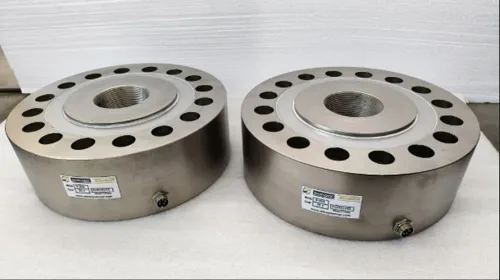
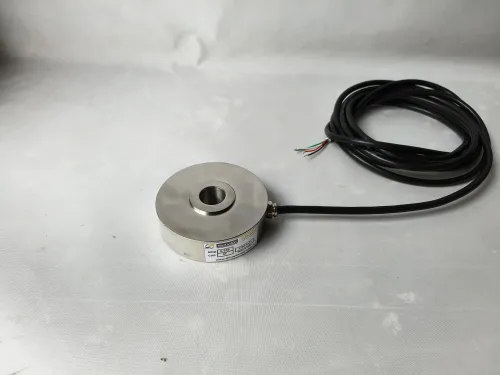
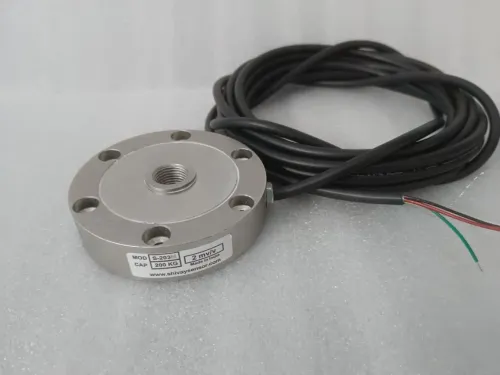
A thru-hole load cell is a low-profile compression sensor designed with a hollow center bore. The bolt or stud passes directly through the center of the sensor. As the nut is tightened, it compresses the load cell against the joint structure.
The internal strain gauges inside the cell deflect minutely under this compressive force, translating the physical clamping load into a precise electrical signal (usually measured in millivolts per volt, $mV/V$). This gives you an exact, real-time readout of the force holding the joint together.
Step-by-Step: How to Secure Accurate Measurements
To achieve repeatable, flicker-free data and stable counts from your load washer sensor, follow these critical installation steps:
1. Ensure Absolute Surface Flatness
Donut load cells are highly sensitive to uneven loading or off-axis forces. The mounting surfaces above and below the load cell must be flat, smooth, and parallel. Any angular misalignment will introduce bending moments, skewing your calibration data.
2. Always Use Hardened, Smooth Washers
Never allow a rotating nut or a rough structural surface to rub directly against the face of the load cell. Always place a hardened, ground washer on both ends of the sensor. This distributes the clamping load uniformly across the sensing element and protects the cell from frictional wear and scratches.
3. Size the Inner Diameter (I.D.) Correctly
Ensure the inner diameter of your through-hole force sensor closely matches the outer diameter of the bolt (e.g., matching standard M12, M24, or M48 fastener sizes). If the clearance hole is too large, the bolt can sit off-center, leading to uneven loading.
4. Pair with a High-Resolution Digital Controller
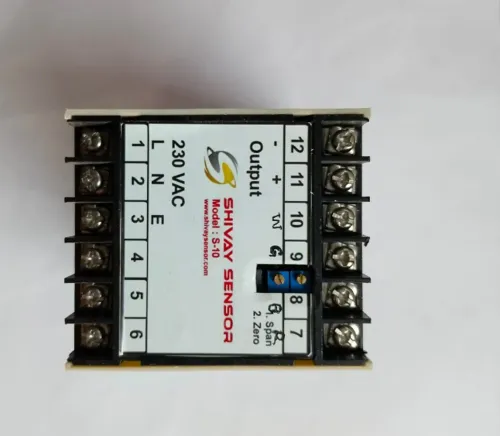
Because strain gauge signals are small, the sensor must be connected to a high-stability signal conditioner or an industrial controller. Look for instrumentation with high-precision Analog-to-Digital Converters (ADCs) that offer strong noise-filtering capabilities to eliminate digital flicker.
Top Applications for Through-Hole Force Monitoring
- Fastener Testing & R&D: Product testing labs use donut sensors to determine the exact torque-to-tension relationship of new bolt geometries, coatings, and lubricants.
- Structural Health Monitoring: Tracking long-term strain and load retention on critical tie-rods, rock bolts, and post-tensioning foundation cables.
- Flange Assembly Calibration: Ensuring uniform gasket compression across multi-bolt industrial pipe flanges to prevent hazardous leaks.
- Heavy Duty Presses: Monitoring real-time press-fit operations and inline compression in automated assembly lines.
Conclusion
Relying solely on torque to estimate bolt preload introduces too many variables and structural risks. When accuracy is non-negotiable, incorporating a through-hole load cell directly into your testing or production setup eliminates the guesswork, providing a direct window into the actual clamping forces at play.
Optimize Your Production Line
Are you designing a system that requires heavy-duty load monitoring? [Insert Company Name/Shivay Sensor] specializes in manufacturing robust, high-precision industrial load cells and customized torque controllers. [Contact our engineering team today] for tailored sensor dimensions and capacities designed to fit your exact application.
#LoadCell
#Sensors
#IndustrialAutomation
#MechanicalEngineering
#TestAndMeasurement
#QualityControl
#Instrumentation
#ManufacturingIndia
#ThruHoleLoadCell
#DonutLoadCell
#ForceSensor
#BoltTension
#ClampingForce
#TorqueVsTension
#EmbeddedSystems
#SmartManufacturing
Keywords